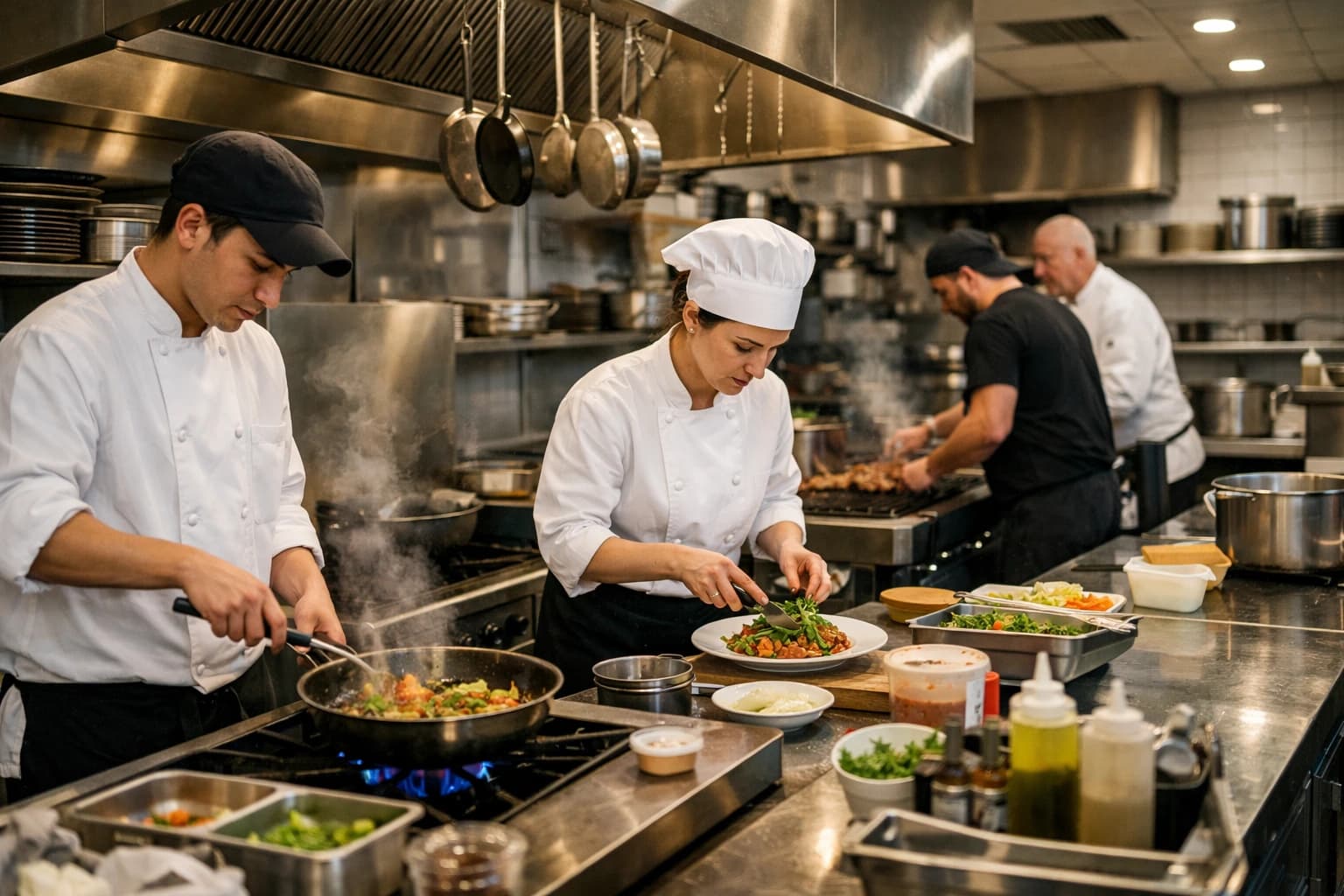
You just got the call from the kitchen: the salmon order is short, the market price jumped this morning, and you have six tops mid-apps. Then your bartender says the keg you planned to run all night kicked early. This is the exact moment operators ask the question they never want to ask out loud: can we change restaurant prices mid service?
The honest answer is: sometimes you can, sometimes you should not, and you always need a system that keeps guests, staff, and your POS in the same reality. Mid-service price edits are less about "can the menu be edited" and more about trust, consistency, and avoiding a comped-table spiral.
Why operators change restaurant prices mid service
Most restaurants are not trying to play games with guests. Mid-service price changes usually happen because the business got forced into a decision window measured in minutes.
The most common driver is cost volatility. If you run anything tied to commodity swings or local availability (seafood, certain cuts, eggs, specialty produce), your margin can disappear between prep and dinner rush. Another driver is inventory shock. You planned to sell a featured item at a price that assumes a full night of volume, then the delivery is wrong or a tray hits the floor.
There is also the operational reality of live demand. A sudden rush can expose that a special was underpriced, or that a popular cocktail is draining a limited ingredient faster than you forecasted. At that point, you either change the price, stop selling it, or keep selling it and accept the hit.
The hidden reason: fixing yesterday's mistake
Plenty of “mid-service” changes are actually late corrections. A price was typed wrong, the printed inserts are outdated, or a manager notices that the menu and POS never matched. If you catch that during service, it feels like a mid-shift decision even though it is really a cleanup job.
The real risk is not the price - it is the mismatch
Guests rarely get angry about a price itself. They get angry when they feel surprised or misled.
Mismatch is what creates that feeling: the QR menu shows one price, the server says another, the POS rings a third, and the receipt becomes the final argument. Even if the change was justified, the experience looks sloppy. Sloppy makes people suspicious.
Operationally, mismatch also wastes time. Servers get stuck explaining. Managers get pulled to tables. Bar tickets get voided and re-rung. If you are changing prices mid-service, your first priority is to prevent “multiple versions of the truth.”
When changing prices mid-service is defensible
There are scenarios where changing prices mid-service is reasonable and can be handled cleanly.
If an item is explicitly market-priced and your menu communicates that expectation, a same-day adjustment is normal. The key is that guests see the rule upfront.
If the change applies to new orders only, not to guests already seated who reasonably relied on the menu they saw, you reduce the fairness problem. A clean line is: anyone who has already ordered gets the original price, and ideally anyone already seated does too.
If the change is correcting an obvious error, it is usually better to fix it immediately than to let a wrong price run all night. But “obvious” matters. A $2 difference might be believable; a $12 jump will look like a bait-and-switch even if it was a typo.
When you should not change prices mid-service
If the change will land on a table that has already scanned, discussed, or ordered, you are basically asking your staff to negotiate trust at every interaction. That is an expensive way to protect margin.
Avoid mid-service increases on signature items that define your concept. Those prices create your brand promise. If a guest came for your burger night or happy hour, changing it while people are in seats is the fastest way to turn a regular into a one-star review.
Also avoid changes that your POS cannot mirror immediately. If your QR menu updates but your POS still rings the old price, or vice versa, you will pay for the inconsistency through comps and time.
A practical policy that keeps you out of trouble
The easiest way to make better mid-service calls is to decide the rule before you are under pressure.
Set a threshold for when you will change price versus when you will 86 the item. For many operators, if the margin impact is small, it is cheaper to keep the price stable and protect guest trust. If the margin impact is large and you cannot substitute product, turning the item off may be cleaner than repricing it in the middle of a rush.
Define a timing rule. A common approach is “changes start next seating” or “changes start at a specific time” (for example, 7:00 pm). That gives staff a simple script and makes the change feel like a new menu phase rather than a surprise.
Make sure the policy includes what happens to open checks and already-seated guests. Most of the conflict lives there.
How to communicate a mid-service price change without drama
If you change a price mid-service, the guest experience depends on how well you communicate and how consistent the touchpoints are.
First, train staff to lead with the reason, not the rule. “Our supplier price changed today” or “we are down to the last portion” is more human than “the price is different now.” You do not need a long story. You need a credible sentence.
Second, keep the message consistent across the room. If one server frames it as “management changed it” and another frames it as “the kitchen messed up,” guests pick up the chaos.
Third, keep the menu display clean. If a price changes, it should change everywhere the guest sees it. If you need to add a short note, keep it direct: “Market price updated at 7:00 pm” or “Limited supply - last call.”
Finally, empower staff with a small comp boundary. If a guest reasonably relied on the earlier price, giving the team a clear limit to honor the old price (or offer a small concession) prevents manager bottlenecks and protects reviews.
The operational workflow: what has to happen in minutes
The decision to change price is only step one. The execution is the difference between smooth and messy.
You need three systems aligned: the guest-facing menu, the POS pricing, and staff communication. If any one of those lags, you create the mismatch problem.
In practice, that means a manager should be able to do a fast check: “Menu updated, POS updated, staff notified.” If you cannot complete those three in under five minutes during rush, you are better off 86ing the item than repricing it.
Digital menus help, but only if you treat them like a live system
A QR menu is not a PDF on the internet. It is a live service tool. That is good news because it means you can update in real time. It is also a responsibility because it means you need a simple process and clear roles.
With a platform like Kiuar.menu, operators edit the menu once and every table’s QR code reflects the change instantly, which is exactly what you need when an item availability or price shifts mid-service. The win is not “digital for digital’s sake.” The win is one source of truth during the hardest hour of your night.
Pricing ethics: what guests consider fair
Most guests accept that restaurants operate on tight margins. What they do not accept is feeling tricked.
Fairness usually comes down to expectations. If your concept regularly uses market pricing, seasonal menus, or rotating specials, guests already expect movement. If your brand has always been stable, sudden mid-meal increases will feel personal.
There is also the “already committed” effect. If a guest has already decided and ordered based on a price they saw, changing it after the fact will feel unfair even if you did not intend it that way. That is why protecting open checks and already-seated guests is the cleanest approach.
The trade-off: margin protection vs. repeat business
Mid-service price changes can protect margin, but they also spend trust.
If you are a tourist-heavy location with low repeat dependence, you might tolerate more flexibility. If you rely on locals, regulars, and word-of-mouth, trust is your margin. The right call depends on your audience, your category, and how often you are forced into changes.
There is also staff morale. Servers hate being put in a position where they have to defend decisions they did not make. If mid-service price shifts are frequent, your team will feel like they are constantly negotiating, which slows service and increases burnout.
How to reduce the need for mid-service price changes
The best mid-service price change is the one you never have to make.
Tighten your pre-shift checks. Confirm that the menu, POS, and any specials boards match before doors open. If you run market-sensitive items, set your pricing window earlier in the day and stick to it unless something truly changes.
Use menu engineering to build shock absorbers. If one item has wild cost swings, consider smaller portion options, add-ons, or limited-quantity language that gives you flexibility without repricing the whole dish.
And watch your data. If an item is consistently selling out early, that is a pricing signal. Raising the price before service or limiting availability may be less disruptive than changing it while guests are ordering.
A simple standard to keep in your pocket
If you are about to change restaurant prices mid service, ask one question: will this create two different prices for the same item in the same room?
If the answer is yes, you are walking into conflict. Your best alternatives are to apply the new price only to clearly defined future orders, or to pause the item entirely. Protecting clarity is often more profitable than squeezing an extra point of margin in the middle of chaos.
Tonight’s service will throw surprises at you. Your job is not to eliminate them. It is to make sure your guests never feel them.