In the fast-changing restaurant industry, traditional paper menus are rapidly becoming a thing of the past. To stay competitive, operators are turning to digital menus—electronic versions of the menu accessible via smartphones or QR codes. While these tools offer undeniable convenience and hygiene benefits, their true potential lies in their ability to generate a significant Return on Investment (ROI).
Investing in a digital menu is not just about modernizing; it is about creating value. By enhancing customer satisfaction, increasing average order values, and cutting operational costs, a well-executed digital menu can position a restaurant for long-term success.
The 4 Pillars of Digital Menu ROI
To maximize returns, it is essential to understand exactly where the value comes from.
1. Reducing Operational Costs
One of the most immediate ROI drivers is the elimination of printing costs. Traditional paper menus require expensive reprinting every time there is a price change or a seasonal update. Digital menus allow for real-time updates at no additional cost, making them a sustainable and cost-effective solution.
2. Increasing Order Value Through Upselling
Digital menus are powerful psychological tools for upselling. Unlike static paper menus, digital platforms allow you to highlight "Recommended Pairings" (e.g., suggesting a specific wine with a steak) or promote high-margin add-ons. High-quality visuals and videos make premium items more enticing, prompting diners to try dishes they might otherwise overlook.
3. Faster Table Turnovers
Operational efficiency directly impacts revenue. A streamlined QR code menu eliminates the initial wait for a server to bring a physical menu. Guests can scan and browse immediately, speeding up the ordering process and increasing table turnover rates, which allows you to serve more customers per shift.
4. Data-Driven Decision Making
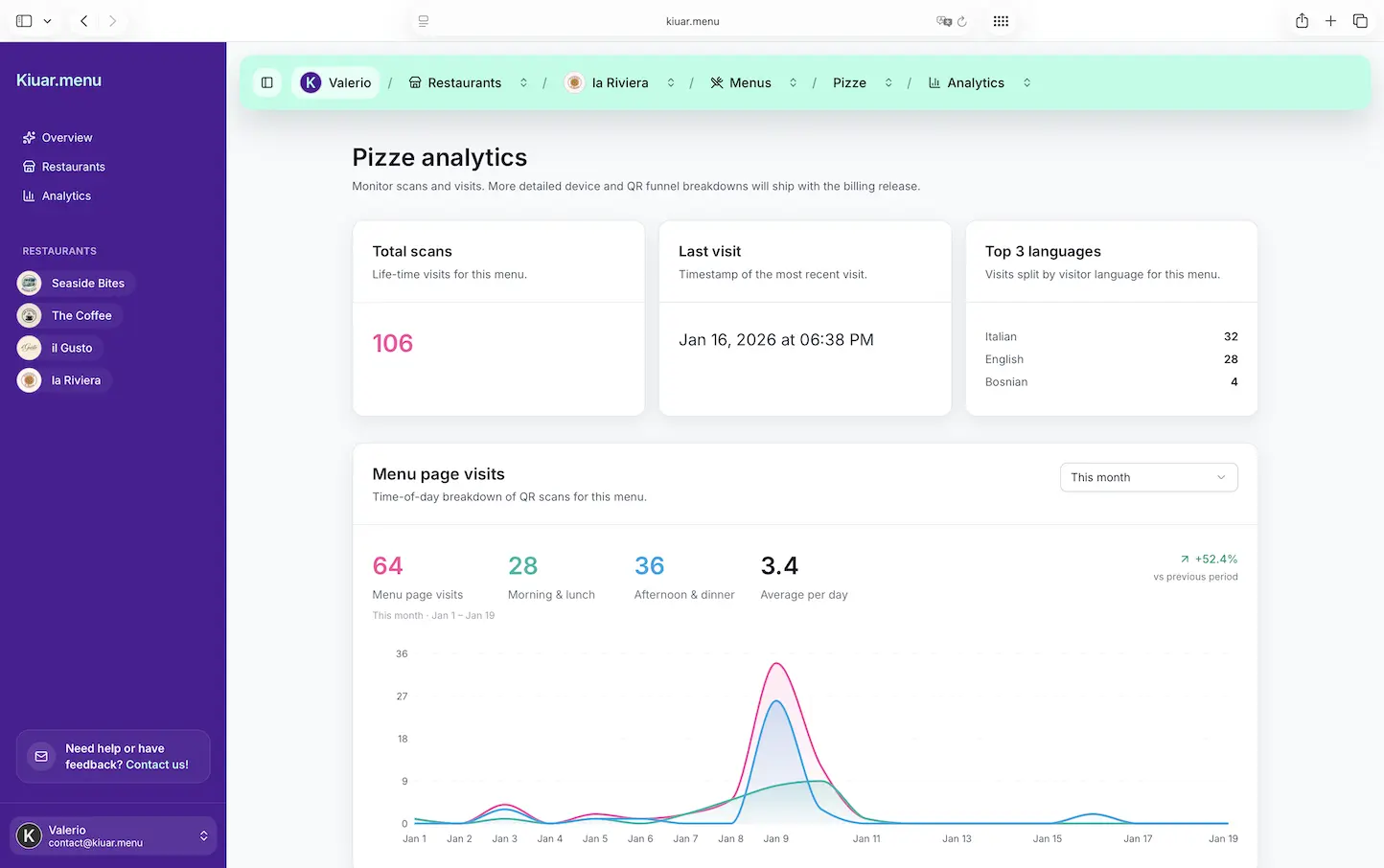
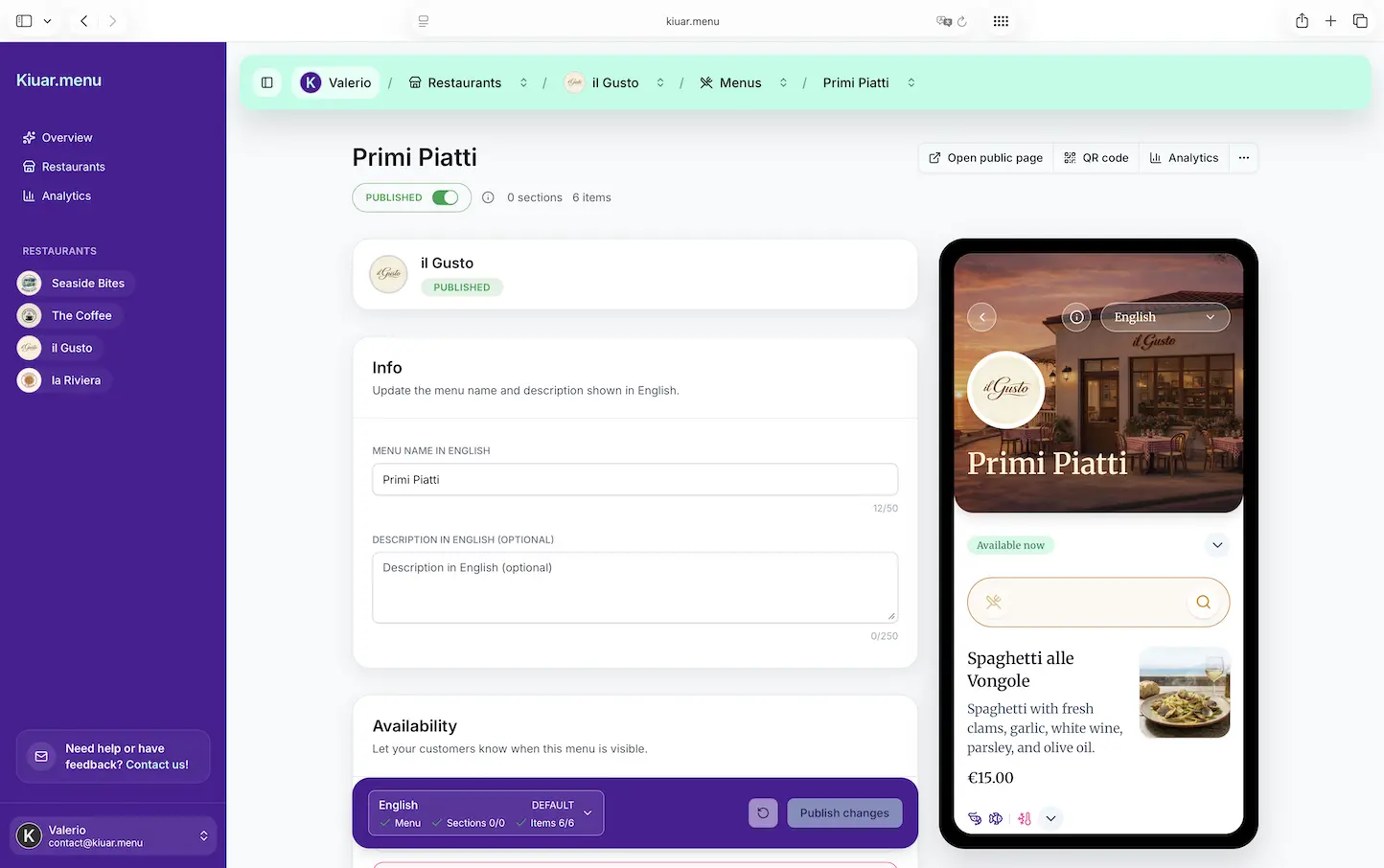
Digital menus provide analytics that paper menus cannot. You can track popular items, identify underperforming dishes, and analyze ordering trends during lunch versus dinner. These insights allow you to optimize your menu engineering and marketing strategies based on actual customer data. Kiuar.menu is a good example of a tool that provides this functionality across multiple restaurants, individual locations, and single menus.
How to Build a High-ROI Digital Menu
Creating a digital menu that drives results requires more than just uploading a PDF. Follow these steps to ensure your menu maximizes engagement and profit.
Step 1: Choose a Flexible Platform
Select a digital menu builder that offers easy customization and real-time synchronization. Your platform should allow you to hide sold-out items mid-service or add seasonal specials instantly. Look for platforms that support multi-language translation and dietary tagging (e.g., allergen alerts), as these features ensure every guest feels confident ordering, regardless of their background.
Step 2: Design for User Engagement
Your menu's design dictates how customers interact with it. To boost ROI:
- Use High-Resolution Visuals: Images and animations captivate diners more effectively than text alone.
- Implement Clear Categorization: Organize items logically (Appetizers, Mains, Desserts) to reduce friction.
- Highlight Specials: Use bold fonts or banners to draw attention to high-profit items.
The Critical Balance: Technology vs. Human Service
While digital menus drive efficiency, recent research suggests that service quality remains the primary driver of customer satisfaction.
A study on sustainable QR menus found that while e-service quality (the ease and speed of the digital menu) is important, it impacts customer satisfaction indirectly by improving the overall perception of service quality. However, technology should not replace human hospitality.
- Mitigate Perceived Risk: Some customers may worry about privacy or security when scanning QR codes. Ensuring your system is secure and user-friendly is vital, as customers with high risk perception actually derive more value from a high-quality e-service experience when it works well.
- Maintain the Human Touch: Staff should still interact with guests. The efficiency gained from digital ordering should free up servers to focus on hospitality, answering questions, and building relationships, rather than just taking orders.
Future-Proofing Your Restaurant
To maintain a high ROI, keep an eye on emerging trends. The future of digital menus includes AI-powered recommendations that personalize suggestions based on customer preferences, and Augmented Reality (AR), which will allow diners to visualize dishes in 3D on their tables before ordering.
Conclusion
A digital menu is more than a list of dishes; it is a strategic asset. By leveraging cost savings, data analytics, and upselling opportunities, restaurants can create a modern dining experience that is both efficient and memorable. Start building your custom digital menu today to watch your investment pay off through streamlined operations and happier customers.