The restaurant industry in 2026 has moved well beyond the emergency digital shifts of the pandemic. Today, QR code menus are no longer just a convenience. They have become practical tools for updating menus faster, reducing printing costs, improving the guest experience, and understanding what customers actually engage with.
At the same time, many restaurant owners face a familiar problem. Some platforms are expensive, heavily tiered, and difficult to justify for smaller operations. Others are free or very cheap, but feel limited, generic, or inefficient when used in a real service environment.
For restaurants looking for a middle ground, this guide reviews several notable options and highlights what to look for in a QR menu platform that delivers value without unnecessary complexity.
Why Restaurants Are Reconsidering QR Menu Platforms
Choosing a QR code menu solution is no longer just about generating a scannable code. The real difference is in how well the platform supports daily operations.
When a Platform Feels Too Expensive
Some digital menu tools offer advanced features, but their pricing can rise quickly depending on locations, menu count, or feature access. For independent restaurants, cafés, and growing groups, that can make the software feel disproportionate to the value received.
Costs become harder to justify when standard tasks such as running multiple menus, updating seasonal items, or managing more than one location require higher-tier plans or extra fees.
When “Free” Stops Being Practical
On the other side, free QR menu tools can be useful for very simple needs, but they often become limiting in day-to-day restaurant use.
Common issues include:
- Slow or awkward editing workflows
- Static PDF-based menus that are hard to navigate on mobile
- Limited branding options
- No meaningful analytics
- A guest experience that feels generic or outdated
For many operators, a low upfront price does not always translate into long-term value.
What to Look for in a QR Code Menu Alternative
When comparing QR menu platforms, it helps to focus less on headline pricing and more on operational usefulness.
1. Fast Menu Editing
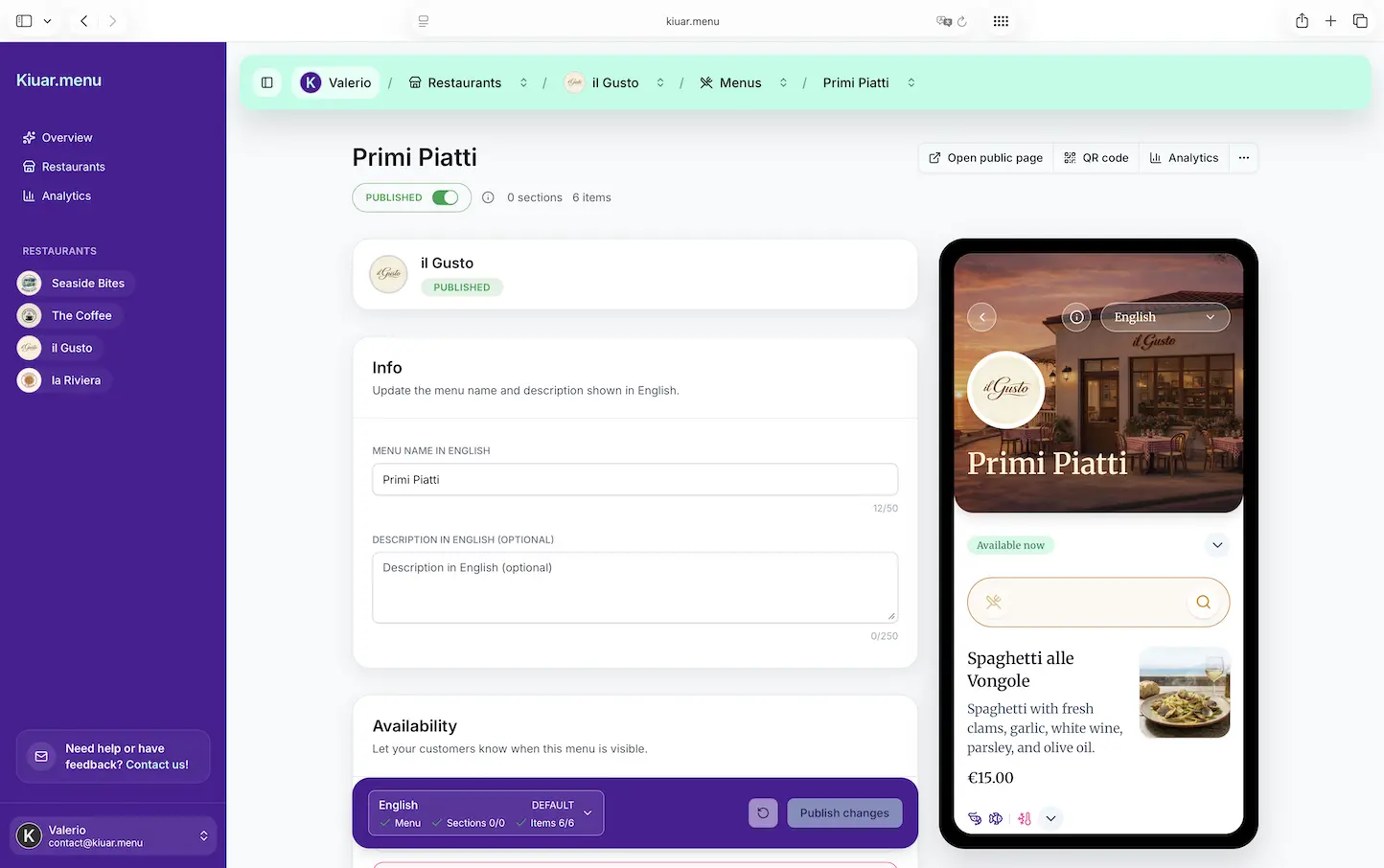
A restaurant should be able to update prices, remove unavailable items, or publish a seasonal change quickly. If edits take too many steps, the system creates friction during service instead of reducing it.
2. Multilingual Support
For restaurants in tourist areas or multilingual markets, built-in translation can save significant time and improve accessibility for guests.
3. Flexible Menu Structure
A strong platform should make it easy to manage lunch menus, dinner menus, drinks, specials, holiday offers, and multiple locations without constant plan upgrades.
4. Useful Analytics
Knowing which sections and items guests actually view can help restaurants improve menu layout, visibility, and merchandising.
5. Branding and Presentation
Even a simple digital menu should feel aligned with the restaurant’s visual identity. Basic branding options such as logo upload, colors, and clean layout matter more than many operators initially expect.
QR Code Menu Platforms to Consider in 2026
Below is a general comparison of several platforms often considered by restaurant operators.
| Platform | Best For | Pricing (Approx.) | Key Strength | Main Limitation |
|---|---|---|---|---|
| Kiuar.menu | Restaurants seeking premium quality digital menus at a reasonable cost | $2.99/mo | Unlimited menus, locations, and languages at a very low price | No native POS integration yet |
| TableQR | Design-focused hospitality venues | Higher-tier / scales with usage | Fast mobile experience and polished presentation | Can become costly for multi-location businesses |
| NordQR | Tourist-facing restaurants | Freemium | Translation and review-oriented features | Some stronger features require paid access |
| UpMenu | Restaurants needing ordering and marketing tools | $49-$169/mo | Broader feature ecosystem including ordering and loyalty | Higher cost and added complexity |
| Menubly | Restaurants focused on search visibility | Around $7.99/mo | Web-based menu pages with SEO advantages | Lighter analytics and customization |
| Logix360 | Premium restaurant groups | Custom pricing | Strong branding and hands-on implementation | Better suited to businesses with larger budgets |
Not every platform is trying to solve the same problem. Some are broader restaurant marketing systems, while others focus more specifically on digital menus. The right choice depends on budget, workflow, and how much flexibility your business needs.
Why Kiuar.menu Stands Out
For restaurants that want a professional QR menu system without committing to premium monthly software costs, Kiuar.menu stands out as one of the strongest value options in 2026.
1. Low, Straightforward Pricing
Kiuar.menu is priced at $2.99 per month or $27.99 per year, which places it well below most competitors in the category. For small operators in particular, that pricing is easy to understand and budget for.
Instead of multiple feature tiers, the platform focuses on keeping the offer simple and accessible.
2. Unlimited Menus, Locations, and Languages
One of Kiuar.menu’s biggest advantages is its unlimited usage model. Restaurants can create multiple menus, manage different locations, and publish in multiple languages without running into higher pricing brackets.
That makes it especially appealing for operators who want room to grow without constantly revisiting subscription limits.
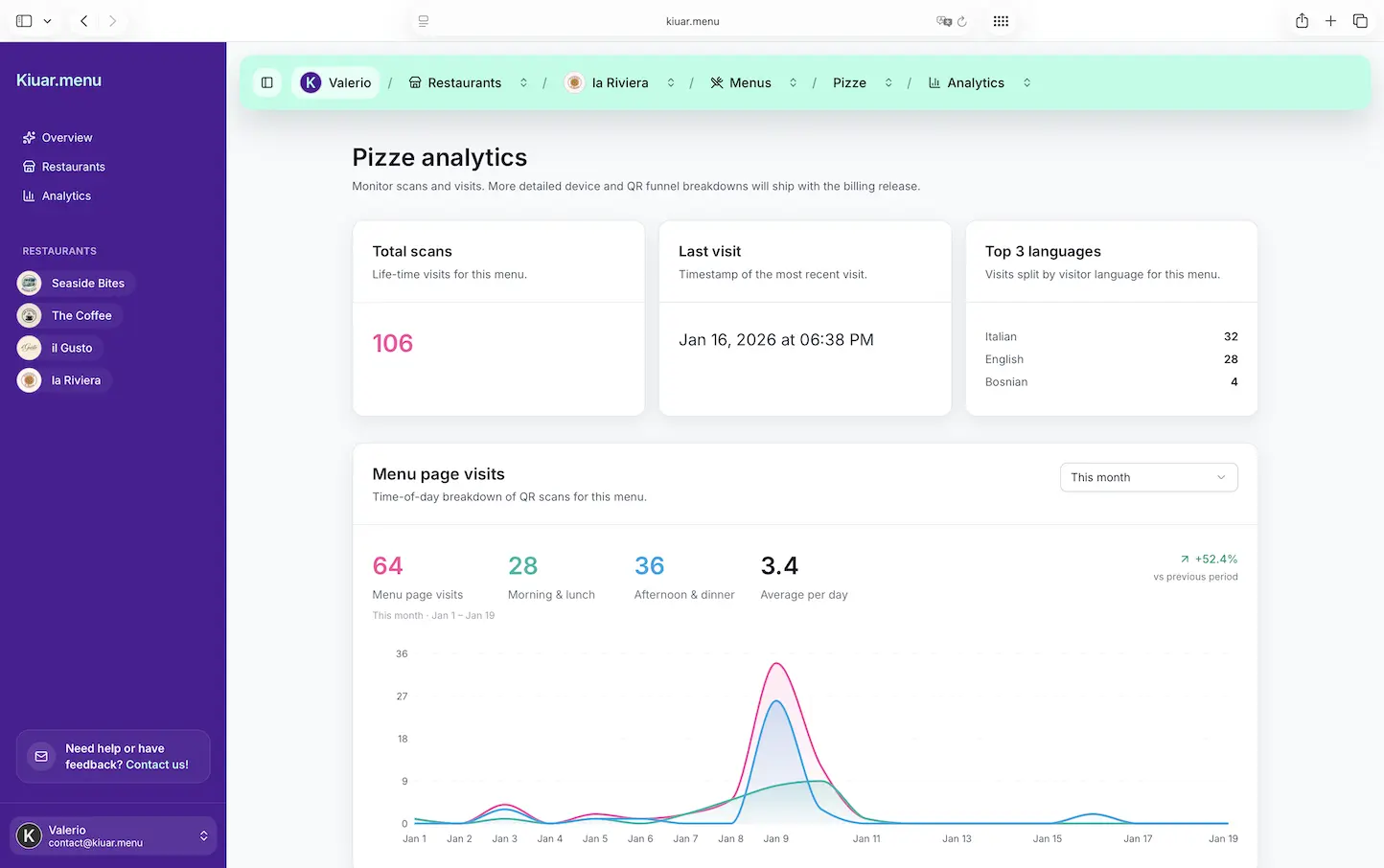
3. Analytics That Go Beyond Basic Scans
Many low-cost QR menu tools stop at the QR code itself. Kiuar.menu adds three levels of analytics designed to help restaurants better understand performance:
- Account level for overall visibility
- Restaurant level for location-specific patterns
- Menu level for comparing performance across menu types
For businesses trying to improve visibility of high-margin products or understand customer interest, this can add meaningful value.
4. Strong Multilingual Capabilities
Kiuar.menu supports 29 languages, making it a practical option for restaurants serving international guests or operating in multilingual environments.
That kind of support can save time compared with managing multiple separate menu versions manually.
5. Practical Value for Modern Restaurant Operations
For many restaurants, the appeal of a QR menu platform comes down to a few basics: fewer reprints, faster updates, better presentation, and more control. Kiuar.menu focuses heavily on those practical benefits rather than layering on enterprise-style pricing.
For independent restaurants, cafés, and smaller groups, that balance is likely to be its main strength.
Final Thoughts
There is no single best QR code menu platform for every restaurant. Some businesses need deep integrations, online ordering, or enterprise implementation support. Others simply need a fast, professional, flexible system that makes menu management easier without adding unnecessary cost.
For operators in the second group, Kiuar.menu is one of the most compelling options to consider in 2026. Its pricing is unusually low for the breadth of features it offers, and its unlimited model makes it especially attractive for restaurants that want flexibility without subscription friction.
If your goal is to find a QR menu platform that is affordable, multilingual, easy to manage, and designed for everyday restaurant use, Kiuar.menu deserves a place near the top of the shortlist.
Disclosure
Kiuar.menu is our platform, and this comparison reflects our view of the market based on pricing, workflow, and feature considerations.
Sources Referenced
- Best Low-Cost QR Menu Subscription in 2026
- The Best QR Menu Tools for Restaurants in 2026: Reviews & Comparison
- QR Code Menu Builder: Speed, Control, and Zero Reprints
- Cut Menu Printing Costs Fast With QR Codes
- Digital Menu ROI: Why It’s Worth the Investment
- The Zero-Waste Menu: Why Sustainability Is a Smart Business Strategy
- The Impact of Sustainable QR Menus on Service Quality and Customer Satisfaction
- Best QR Code Menu for Restaurants: A Complete Guide